Event 1
Norfolk smuggling mission
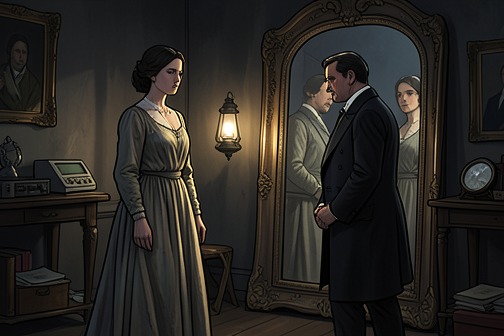
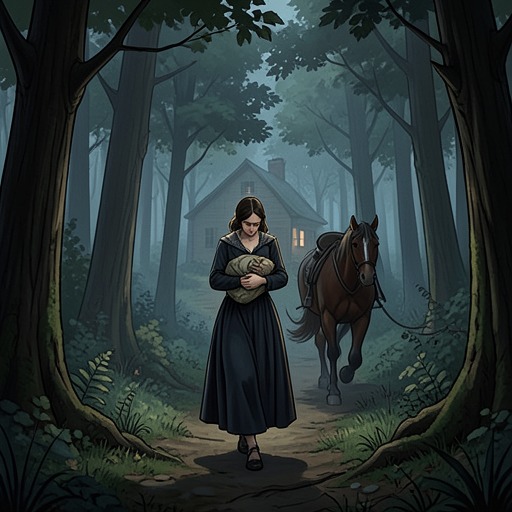
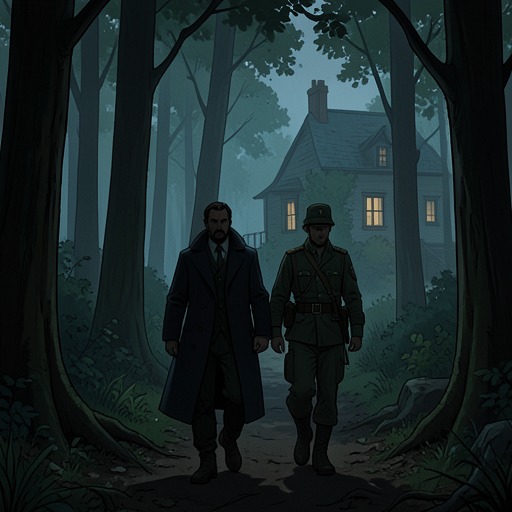
The [Norfolk smuggling mission](entity:event-recall-event-norfolk-smuggling-missi-c1e3d191fe6f) is a secret assignment that [Dominic Cavendish](entity:character-recall-character-dominic-cavendish-2b4bcec99931) tells [Isobel Davenport](entity:character-recall-character-isobel-davenport-fa4c7fcddebf) he and [Peter Davenport](entity:character-recall-character-peter-davenport-977cc816e3bf) have received from the Prince Regent: to confront a ruthless gang operating along the [Norfolk](entity:location-recall-location-ead851996a91) coast. Its immediate demands are secrecy, danger, and separation. Its lasting significance is more personal and uncertain. [Isobel](entity:character-recall-character-isobel-da5547cd8ca4) is left waiting on [Dominic](entity:character-recall-character-dominic-a456bf208f92)’s promise to return, then learns of [Peter](entity:character-recall-character-peter-22e18a2305ec)’s reported death and Dominic’s marriage, events that recast the mission’s departure as the beginning of a devastating rupture. The account establishes the assignment and its consequences for Isobel, but does not resolve what happened during the mission itself.
## Background and Assignment
Dominic and Peter had both recently returned from France and initially parted to address urgent family matters. Peter went back to [Willowbrook Hall](entity:location-recall-location-willowbrook-hall-3470adb8c07d); Dominic travelled to [Leicestershire](entity:location-recall-location-5e48668fbbc5) for family business. Several weeks later, eager to catch up, Dominic accepted Peter’s invitation to dine at Willowbrook Hall. In the weeks that followed, he repeatedly visited, using tours of the house and estates as opportunities to spend time with Isobel. Their growing attachment took shape under the watch of Peter, Aunt [Elspeth](entity:character-recall-character-elspeth-eed8b5b30dee), or members of the household staff.
At a private conversation before the departure, Isobel noticed Dominic’s vagueness and wondered whether he intended to travel abroad. He told her that he and Peter had been asked by the Prince Regent to undertake a secret mission. A group of smugglers was operating along the Norfolk coast, and people were dying as the gang grew more ruthless. Dominic presented action against them as necessary, but explained little about the mission’s practical arrangements. The evidence supplies no details of the gang’s leaders, the men’s route, or the assignment’s eventual outcome.
## Departure and Separation
The mission required Dominic and Peter to rejoin some of their former battalion and form a special group. Because the work was secret, neither man would be able to contact Isobel while they were away. Dominic could not say how long they would be gone: the absence might last weeks or months. This uncertainty was part of the assignment’s immediate cost. Isobel asked Dominic to promise that he would remain safe; he promised that he would return to her as soon as he could. She took comfort from the assurance, while the departure left her without a reliable way to learn what was happening.
The silence was not simply a consequence Isobel discovered afterward. Before leaving, Dominic had made clear that he did not want her to write to him and had given her no address or other means of contact. Nor had he promised to write or send word. At the time, she accepted these conditions without questioning them. Later, understanding how distant he had seemed on the day of departure, she interpreted that vagueness differently: the absence of communication, initially framed by secrecy, also became part of the pattern that made her feel deceived.
## The Mission in Isobel’s Retrospect
For weeks Isobel worried about the men’s safety and waited for Dominic, believing his assurances and having entrusted him with her heart and body. The news that reached her transformed the meaning of that wait. She learned from Aunt Elspeth that Peter had been slain in a fierce battle with the smugglers he and Dominic had been sent to defeat. Mere days after Peter’s departure, Dominic had returned to his father’s estate in Berkshire and married a woman to whom he had apparently been betrothed for some time.
The contrast between the stated purpose of the mission and this report is central to Isobel’s retrospective account. The men had supposedly been sent together to confront the smugglers; Peter was reported killed in that conflict, while Dominic was said to have returned home and married. Isobel’s knowledge does not provide a full account of the intervening events, and the mission’s operational history remains unresolved in the evidence presented. What it does establish is the sequence as she understands it, and the force with which the news overturns her expectations.
## Consequences and Significance
Isobel experiences the mission not as a completed public undertaking but as a private promise broken in the space left by secrecy. Dominic had assured her that he would return, yet his silence meant she had no chance to ask for an explanation or confirm his safety. When the report of his marriage arrives, the earlier prohibition on writing and his failure to send word acquire a painful new meaning. She concludes that he had reneged on his promises, with the bitter exception that he had remained safe while Peter had not.
Her response also turns the assignment into a crisis of loyalty. She questions whether Dominic’s friendship with Peter meant anything and whether he understood loyalty at all. Those questions arise from the news of Peter’s reported death and Dominic’s marriage, not from any witnessed account of the mission. The distinction matters: the mission supplies the circumstances that separate Isobel from the men, while the later reports shape her judgment of Dominic. In the remembered account, the assignment’s defining consequence is therefore the collapse of the trust Isobel had placed in him, even as the truth of the mission’s events remains beyond what she knows.
Event 2
Rupert takes Isobel to Gosport Hall and imprisons her
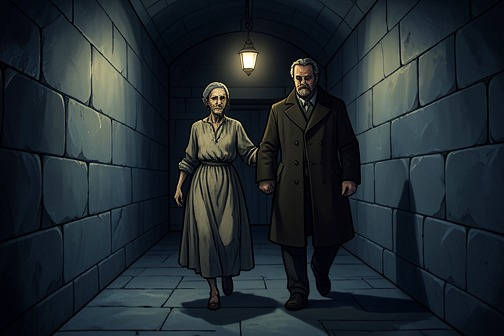
[Rupert takes Isobel to Gosport Hall and imprisons her](entity:event-recall-event-rupert-isobel-gosport-h-4932b478a42b) when [Rupert Davenport](entity:character-recall-character-rupert-davenport-c0531eea5ced) exploits a false report of [Peter Davenport](entity:character-recall-character-peter-davenport-977cc816e3bf)’s death to take control of his niece. He removes [Isobel](entity:character-recall-character-isobel-da5547cd8ca4) from [Willowbrook Hall](entity:location-recall-location-willowbrook-hall-3470adb8c07d) under the authority of guardianship, then subjects her to confinement, repeated beatings, and a proposed marriage to [Bertram DeLisle](entity:character-recall-character-bertram-delisle-781da659976a). The episode’s decisive reversal is that [Kitty](entity:character-recall-character-kitty-d0bbf3d0d3b1), Isobel’s maid, risks her own safety to make escape possible: the apparent transfer of Isobel into [Rupert](entity:character-recall-character-rupert-d1c14ade5ea7)’s custody becomes the beginning of her flight from it.
## Causes and Removal
Before Rupert arrived, Isobel had spent two and a half weeks with her aunt [Elspeth](entity:character-recall-character-elspeth-eed8b5b30dee) at Willowbrook Hall. Rupert came there claiming that [Peter](entity:character-recall-character-peter-22e18a2305ec) had died in [Norfolk](entity:location-recall-location-ead851996a91) and that, as a result, he was Isobel’s legal guardian. He said that a magistrate named Worthing had informed him of Peter’s death, while admitting he did not know all the facts. Isobel was shocked by the news and could not establish whether it was true before Rupert pressed her to leave.
Rupert strengthened his claim by threatening Elspeth with confinement in an asylum if she opposed him. Elspeth became distressed, and Isobel agreed to go only after securing Rupert’s promise that her aunt could remain at Willowbrook Hall for the time being. The choice was made under pressure: Isobel was given little time to pack, did not know where Rupert was taking her, and was still reeling from the claim that her brother had died. Her belongings were few, and the move was so hurried that she was ushered into the waiting carriage before she could think through what was happening.
Isobel insisted that Kitty accompany her, refusing to leave without a lady’s maid. Rupert initially resisted but eventually agreed. That decision brought Kitty into the same household as Isobel, where she would later become the person able to help her escape. At Willowbrook, Rupert had presented himself as curt but not openly hostile; his claim to family authority therefore concealed the much harsher treatment that followed at [Gosport Hall](entity:location-recall-location-gosport-hall-fcf0fe7602e8).
## Confinement at Gosport Hall
On their arrival, Rupert summoned Isobel downstairs. He had eaten and was drunk, and he asserted that she must now accept his house rules because Peter was dead and Rupert was her guardian. Isobel recalled that his manner and hatred made the change from his earlier conduct unmistakable. The supposed legal transfer of responsibility did not provide her protection: within Rupert’s house, the guardianship he invoked served to enforce his control over her.
Isobel later told [Dominic Cavendish](entity:character-recall-character-dominic-cavendish-2b4bcec99931) that Rupert beat her on most days. The assaults varied in severity, but she said there were times when she thought she might not survive. She also described periods when she did not want to survive. Her account establishes the effects of the confinement without making the abuse a single isolated outburst: it was a repeated feature of daily life, and its increasing danger shaped the urgency of escape.
Toward the end of her captivity, the beatings became less frequent, but Rupert began preparing for Bertram DeLisle’s visits. He told Isobel that he had sold her to [DeLisle](entity:character-recall-character-delisle-ad0cdbc91576), who was coming to inspect her, and expected her to improve her appearance. Rupert’s manservant told the remaining servants that Isobel was betrothed and would soon leave to marry DeLisle. The marriage plan thus accompanied the physical confinement: Rupert treated Isobel as someone whose future could be arranged for his purposes, while presenting the proposed departure as a betrothal.
## Kitty’s Intervention and Isobel’s Escape
The prospect of being sent to DeLisle prompted Kitty to act. She warned Isobel that Rupert intended to have her married and taken away the following morning, and urged her to leave that night. Kitty’s warning supplied the immediate cause of Isobel’s escape: the danger was no longer only the recurring beatings but also the imminent removal into a marriage arranged without her consent.
Kitty helped Isobel flee Gosport Hall, but her assistance exposed her to considerable risk. When Isobel considered the few minutes in which events had changed, she knew Kitty had been left behind, bound to a chair and held prisoner in the room Isobel had just left. The escape therefore did not simply end the danger for both women at once. Isobel could get away, while Kitty remained in Rupert’s power for a time.
After Rupert learned that Isobel had escaped, he left with his henchman to search for her. Kitty was eventually found by one of Rupert’s staff and set free. His departure to pursue Isobel gave Kitty the opportunity to escape the house herself. She had given Isobel all her own funds; afterward, she took money from a desk in the library and made her way back to Willowbrook Hall. There she resumed a nervous place among the household staff, apparently not considered important enough by Rupert to be pursued.
## Aftermath and Significance
The truth about the removal emerged later, when Peter returned to Willowbrook Hall with [Dominic](entity:character-recall-character-dominic-a456bf208f92) after their affairs in Norfolk had been concluded. Elspeth and the servants had been left in confusion: Rupert had used threats and lies to secure their compliance, while Isobel had been carried away in an unmarked carriage and had sent no word. Elspeth had also believed Peter murdered by smugglers, so his return exposed the false report on which Rupert had based his claim to guardianship.
Kitty’s account of Isobel’s flight and destination helped Dominic and Peter understand what had happened at Gosport Hall. Isobel’s own later recollection filled in the sequence: the false news of Peter’s death, her hurried removal, Rupert’s conduct in his house, the repeated beatings, and the intended marriage to DeLisle. The event is therefore disclosed through both aftermath and testimony. What first appeared at Willowbrook as an abrupt exercise of guardianship is revealed as a sustained seizure of Isobel’s freedom, concealed behind a claim of family and legal authority.
The episode also makes Kitty’s loyalty consequential rather than merely affectionate. She recognizes the immediate danger, warns Isobel, and helps her leave even though she herself is then imprisoned and must later escape separately. Isobel’s flight begins in dependence on that act of solidarity, while Rupert’s false account of Peter’s death and his proposed marriage to DeLisle show how he combines deception, social authority, and coercion to control her future.
Event 3
Isobel escapes Gosport Hall

[Isobel escapes Gosport Hall](entity:event-recall-event-isobel-gosport-hall-a29bd06ed4d0) by turning the house’s own routines and remnants into the means of her flight. With [Kitty](entity:character-recall-character-kitty-d0bbf3d0d3b1)’s help, she slips away from the confinement [Rupert](entity:character-recall-character-rupert-d1c14ade5ea7) has imposed, avoids recognition by disguising herself as a boy, and sets out on foot toward [Coniston](entity:location-recall-location-coniston-30748784ebbf). The escape is both a physical break from captivity and the beginning of a precarious attempt to secure an independent life: freedom first means darkness, hunger, sore feet, and the need to keep moving.
## Causes and Stakes
The flight is urgent because [Isobel](entity:character-recall-character-isobel-da5547cd8ca4) expects to be taken away the following day, and fears that going with those who will take her may cost her her safety or even her life. Her fear is sharpened by the prospect of marriage to an elderly man whose leering attention has already made her feel threatened. The immediate choice is therefore not between safety and danger, but between remaining under Rupert’s power and risking escape with almost nothing.
Kitty recognizes the urgency and urges Isobel to leave. Isobel has a pouch of coins that [Peter](entity:character-recall-character-peter-22e18a2305ec) left her, but Kitty also presses her own life savings into Isobel’s hand. She asks that the money be returned if Isobel becomes safe, while making clear that getting out comes first. The money is not simply assistance for the road: it is a practical resource offered at personal cost by the person risking punishment for helping her.
Kitty proposes a first destination rather than pretending to have a complete solution. Her relatives in Coniston, in the Lakes, can offer Isobel a warm, dry place for a time, though they cannot keep her indefinitely. Kitty directs her to ask for her cousin Annie, who works at Winheld Hall. Isobel accepts the plan while understanding that it offers temporary shelter, not a settled future. Her eventual independence will require finding work and making a life without the usual references.
## Kitty’s Part in the Escape
The escape depends on Kitty’s willingness to expose herself to danger. To make her own assistance less apparent, she tells Isobel to tie her up. Isobel recoils at the thought of causing her pain, even while recognizing why Kitty has proposed it. In the dark, Isobel can see blood at the corner of Kitty’s mouth; she apologizes and wishes she could undo the ties and comfort her. Kitty, however, insists that Isobel leave immediately. Their farewell is brief and restrained: Isobel looks back for reassurance, receives Kitty’s encouraging nod, and disappears into the upper hallway.
The exchange establishes the escape as a shared act of courage, not a solitary feat of ingenuity. Kitty supplies the funds, the destination, and the plan to disguise her own involvement; Isobel must accept help even when doing so means leaving her ally behind in a vulnerable position. Isobel also tells Kitty that if Rupert punishes her or throws her out, she should make her own way to Coniston. She imagines the possibility of meeting there again and asks whether Kitty has enough money of her own. Even as she flees, Isobel remains concerned about the person who made her flight possible.
## The Route Out of [Gosport Hall](entity:location-recall-location-gosport-hall-fcf0fe7602e8)
The house has been Isobel’s virtual prison for two months. Her route out begins in Peter’s old bedroom, at the far corner of the sprawling house. Its furniture remains under dust cloths and old sheets, and the room has not been aired, but it still carries a faint trace of Peter. The room brings grief with it: Isobel longs to stop and give way to sobbing, yet dawn is approaching, and discovery would endanger both her and Kitty. The need to escape overrules the comfort of lingering in a place associated with her brother.
Peter’s old method of leaving the house gives her a way out. During his youth he secured a rose trellis to the wall and used it to climb down. Isobel first tests the bedroom window, struggling with its stubborn metal latch until the old ironwork releases. She sees that the trellis is still in place, but recognizes that climbing it in her skirts would be dangerous. The escape route is available only if she changes how she will be seen and how she can move.
A drawer hidden at the bottom of Peter’s linen press provides the answer. Isobel remembers that he had dressed like a local when he went into the village, and finds buff breeches, a rough cotton shirt, old boots, a thin jacket, a flat cap, and a riding cloak. She binds her chest with torn strips of her petticoat, conceals her dress and shawl in the drawer, and ties the boots around her neck because they are too large to wear. The disguise is assembled from Peter’s discarded clothing and her own torn garments; it is practical rather than comfortable, and designed to make her less recognizable as she travels alone.
Once dressed, Isobel climbs through the window and grips the trellis above the darkness below. She closes the window as quietly as she can, then works her way through thorny rose bushes to the ground. She crosses the yard in the shadows, avoiding the gravel, and reaches the woodland beside the house. The route converts a familiar feature of Peter’s youth into an escape path, but it offers no guarantee of safety: one slip on the trellis could have proved fatal.
## Flight on Foot
Isobel travels through the night and stops near dawn to drink from a small stream outside a hamlet. Her borrowed boots chafe her feet, while hunger, exhaustion, and a pounding head steadily worsen. She avoids taking one of Rupert’s horses because she believes he would use a charge of horse theft to have her arrested. Walking is slower, but she hopes that staying away from busy roads and out of sight will make her harder to find.
The journey remains uncertain and physically punishing. Isobel does not know precisely where she is or how far she has travelled. She skirts towns and crosses fields, ducking from farmers and the occupants of passing carriages. At one point, with dusk coming on and her strength nearly spent, she rests in the woods and eats one of two apples taken from an orchard. She has no dependable shelter and only a little food; the immediate task is to regain enough strength to continue toward Coniston.
The escape thus changes Isobel’s danger rather than ending it. Inside Gosport Hall she faced confinement and the approaching threat of being taken away; outside, she faces exposure, pursuit, and the practical difficulty of surviving without money enough for the winter. She is willing to work for her keep and recalls enjoying the occasions when she was allowed into the kitchen to make jam and tarts with Cook. But without references, she does not know how she will persuade anyone to employ her. Kitty’s relatives matter because they may help her find a way to maintain her independence, even if only for the immediate future.
## Later Account and Significance
At [Willowbrook Hall](entity:location-recall-location-willowbrook-hall-3470adb8c07d), Isobel later explains that she remained at Gosport Hall rather than being moved elsewhere, and that the familiar setting gave her some comfort while also giving her the opportunity to escape. She identifies the rose trellis as the way out and explains that she survived recapture by dressing as a boy. Peter recognizes the trellis as the route he used to visit the village taverns; [Dominic](entity:character-recall-character-dominic-a456bf208f92) understands that the disguise accounts for Isobel’s clothing. Her account connects the escape’s separate practical decisions—the old trellis, the hidden clothes, and the concealment—to the wider search that followed.
Isobel also explains why she did not travel directly to Dominic. She remembered what he had told her before leaving for [Norfolk](entity:location-recall-location-ead851996a91), but kept to country lanes and away from towns because she did not know whether Rupert was following her. On foot, her winding route took longer than expected, and she had to earn additional pennies for food. When Dominic found her, she had been heading toward him because she could think of no one else she trusted; she had intended to ask for his help in reaching [London](entity:location-recall-location-1bfd335cdd1b) secretly. The account makes clear that escape was not a single triumphant departure from the house, but a prolonged effort to remain unseen while choosing whom to trust.
The event’s decisive turn lies in the difference between leaving and becoming secure. Kitty helps Isobel pass beyond the walls of Gosport Hall, but the road ahead offers no protection by itself. Isobel’s resourcefulness—using Peter’s route, changing her appearance, avoiding roads and towns, and seeking work—makes survival possible, while the need for allies remains. Her escape begins her effort to reclaim control over where she goes and how she lives, without pretending that freedom has already made her safe.
Event 4
A woman mistaken for Isobel is buried
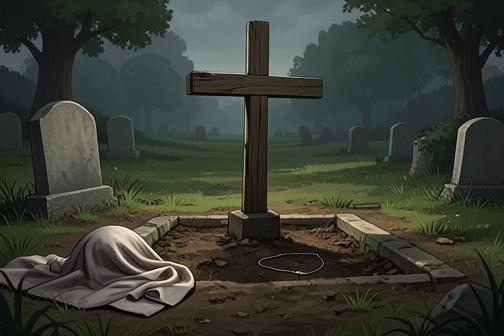
The burial of a woman mistaken for [Isobel Davenport](entity:character-recall-character-isobel-davenport-fa4c7fcddebf) turns a small village grave into seemingly decisive proof of her death. A necklace found on the stranger’s body persuades [Dominic Cavendish and Peter Davenport](entity:relation-recall-relation-dominic-cavendish-an-99c0da120315) that [Isobel](entity:character-recall-character-isobel-da5547cd8ca4) has been murdered; its later appearance in their reunion with her exposes the mistake and reveals how an object of personal meaning became evidence for a false conclusion.
## Discovery and Burial
During their search for Isobel, [Dominic](entity:character-recall-character-dominic-a456bf208f92) and [Peter](entity:character-recall-character-peter-22e18a2305ec) questioned people in towns and villages and combed the surrounding fields, moving north without finding her. A chance conversation overheard by Peter in a village pub outside Peterborough led them to the woman’s resting place. She had been found dead on the outskirts of the town, wearing nothing but a necklace. The farmer who discovered her and other local witnesses helped the men learn where she had been buried.
The woman had no identification, and the local Magistrate, unaware of who she was, ordered a pauper’s funeral. She was buried in a small rural graveyard, away from the family crypt and among people with no known connection to her. A plain wooden cross marked the grave. Even that modest marker depended on the sympathy of a villager: without it, the woman would have had no marker at all. The circumstances of the burial thus reflected not her actual identity, but what the community could establish about an unknown stranger.
## The Necklace as Evidence
The necklace made the grave appear to answer the question Dominic and Peter had been pursuing. It was a thin chain carrying a small stone in a star-shaped setting: Isobel’s star necklace, given to her by her father on her tenth birthday. Though of little financial value, it had been deeply important to her, and she had continued wearing it after his death. Both men believed she would never willingly give it up.
When [Sir Hubert Williams](entity:character-recall-character-sir-hubert-williams-927dc58c6c43), the Magistrate, arrived at the graveyard, Peter confirmed that the dead woman was his sister and asked about the item found on her. Sir Hubert produced the necklace, which he had retained as the only object on the body that might help identify her. Dominic reached to touch it, and the sight of the familiar gift made him believe he had lost Isobel forever. Peter likewise recognized it as hers. Its sentimental history made it persuasive evidence to the men, even though it could not establish that the body belonged to its owner.
The necklace therefore carries two meanings in the event. For the men at the grave, it connects an unidentified woman to the person they are searching for and turns uncertainty into apparent confirmation. In the larger sequence, that same connection proves unreliable: the object’s strong association with Isobel is not proof that she is dead. Its emotional authority exceeds its evidentiary force.
## Grief, Suspicion, and the Magistrate
The burial intensifies Dominic’s grief and anger. He and Peter understand that the circumstances suggest murder, but neither can bring himself to say the word aloud. Dominic asks why Isobel did not go to [Havistock Hall](entity:location-recall-location-havistock-hall-511330894992) for help, recalling that he had told her to contact the estate and had instructed his man of business to assist her. He has received no report that she sought that help. The absence of such a communication leaves him with a question rather than an explanation.
Peter trusts Dominic with his own life and with his sister’s, and understands how deeply Dominic loved her. At the graveside, however, the immediate task is practical as well as personal: Peter says Isobel should be moved from the pauper’s grave to the family crypt and asks Sir Hubert to assist. Dominic then presses the Magistrate for the circumstances of the woman’s death. The exchange marks the grave not as a settled end, but as the starting point of an inquiry into what happened and how the body came to be identified.
Sir Hubert’s own part in the events is shadowed by doubts. After leaving the men, he reflects that he had promised a friend long ago to take whatever action was necessary and had acted on that promise. The men’s honest distress at recognizing the necklace troubles him: he wonders why he was asked to secure the outcome he had, and whether his actions a month earlier were sound, even if well intended. He considers whether to reveal the truth and looks back toward the small cross marking an empty grave. The account does not fully explain his arrangement at this point, but makes clear that his earlier involvement and hesitation are part of the uncertainty surrounding the burial.
## Retrospective Revelation
Later, after Isobel has returned, Dominic tells her that he and Peter were informed she was dead and shown her grave. He produces the same necklace, explaining that the Magistrate gave it to them after it was found on the body of a badly beaten woman by the roadside in [Newisham](entity:location-recall-location-f3e9540778e6). The chain had been the evidence that convinced them the dead woman was Isobel. Isobel’s reaction is hesitant and troubled: rather than asking where the necklace was found, she asks who gave it to Dominic. Her response signals that the object’s history is not straightforward, though the available account does not establish precisely how it came to be on the other woman.
The later disclosure reverses the graveyard scene without erasing its consequences. Dominic and Peter had not merely feared that Isobel was dead; the burial and the necklace gave that belief a place and a material proof. Their grief was genuine, but their identification was wrong. The pauper’s grave consequently stands for a failure of recognition: a woman without a name was assigned Isobel’s identity through a cherished possession, while Isobel herself remained absent and beyond their reach. The event sustains the mystery of her disappearance and explains why her eventual return must confront not only the past danger, but also the certainty her supposed burial created.
Event 5
Reunion at the Melton market
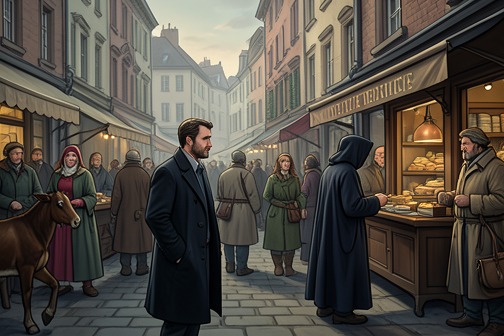
The [Reunion at the Melton market](entity:event-recall-event-melton-8022defdc4c2) turns presumed death into immediate danger: [Dominic](entity:character-recall-character-dominic-a456bf208f92) discovers that [Isobel](entity:character-recall-character-isobel-da5547cd8ca4) is alive, but recognition cannot safely become an open embrace while [Rupert](entity:character-recall-character-rupert-d1c14ade5ea7) is close behind her. Their meeting is therefore both a reunion and a rescue in progress. Dominic must conceal his response long enough to help Isobel escape, and she must decide whether to trust the man she had feared might betray her.
## The Figure at the Bakery
Dominic enters the crowded street in grief, struggling against memories of Isobel and the physical pain of missing her. The market’s ordinary bustle offers a distraction: farmers’ wives shepherd children among noisy animals, people talk in the street, and shoppers move between the small shops. Against this everyday activity, a cloaked figure approaching the bakery arrests his attention. He stops Brutus and watches as the surrounding sounds seem to recede into a buzz.
At first, Dominic cannot reconcile what he sees with what he believes. The figure’s movement seems familiar, and beneath the hood he catches a glimpse of haunting blue eyes that have appeared in his dreams for months. Logic tells him that the woman he loves cannot be buying bread in the village; he still believes Isobel is dead. Yet he cannot leave without knowing. When the figure disappears into the bakery, he dismounts and waits beside the road, caught between the possibility of hope and the fear that grief has deceived him.
When the cloaked person emerges, Dominic notices the pointed curve of a chin beneath the hood and steps into the figure’s path. Isobel’s stunned blue eyes meet his. The recognition is mutual, but the moment is not simple relief: her gasp is followed by the return of the market’s noise, while Dominic’s shock gives way to the overwhelming realization that the person he never expected to see again is standing before him.
## A Plea and a Disguise
Isobel’s appearance explains why recognition seemed impossible. She has cut her hair short, bound her breasts, and hidden her shape beneath loose men’s clothes. After weeks on the streets, her cheeks are hollow and her skin bronzed. Although she has been away from a mirror, she knows she looks unlike her former self; she is startled that Dominic has identified her at all. His recognition rests not on a single obvious sign but on the eyes and movement he had watched for, and on the pointed chin visible beneath the cloak.
Dominic begins to reach out and gently cups her cold cheek. The touch brings Isobel out of her daze, but also forces the danger back into view. She sees Rupert approaching and remembers both her precarious situation and Dominic’s marital status, which makes her fear that he might hand her over. With capture imminent, she asks him to help her, appealing to what she once meant to him. Her pride, she recognizes, matters less than the possibility that the weeks she has spent escaping will end in betrayal.
Dominic understands the warning in her frightened glance over his shoulder. He does not turn to confront Rupert or ask Isobel questions in public. Instead, he adopts the voice of a master reprimanding a servant. He tells her that he assigned her duties that morning, challenges her for running errands for the Cook, and orders her back to the Hall. The stern rebuke supplies a plausible explanation for addressing the disguised fugitive while concealing his affection and his intention to help. As he speaks, he catches Isobel’s eye and winks, silently asking her to trust him. When she hesitates, he gives her a gentle shove toward the road, away from Rupert.
## Escape and Pursuit
Isobel takes the opening and vanishes into the crowd. Dominic remains behind to face Rupert, suppressing his anger and meeting him with a cold, nonchalant stare rather than exposing the escape. The performance buys Isobel a chance to get away, but it does not tell Dominic where she has gone. He hopes she will seek sanctuary at [Havistock Hall](entity:location-recall-location-havistock-hall-511330894992); when he later describes her appearance to Sanderson, he admits he does not know whether she will have the sense to head there. Their search does not last long. Less than a mile outside town, Sanderson spots a brief movement in the woods.
Dominic dismounts and leaves Brutus with Sanderson, directing him to take the horse through the tree line and wait by a gate at the far end. He tells Sanderson to watch for anyone following. Dominic chooses to pursue Isobel himself, in part because she does not know Sanderson and might mistake him for one of Rupert’s men. The search thus continues the same pattern as the encounter at the bakery: protection depends on reading the danger correctly, keeping the right person at a distance, and acting before Isobel can be taken back.
Isobel, meanwhile, has stumbled through the undergrowth until her strength is spent. Hearing twigs snap and heavy footsteps behind her, she turns to face whoever is following. She has no energy left to run over the uneven ground, but resolves to resist capture with what strength remains. A tall, dark figure emerges from the trees; fear overwhelms her, and her knees buckle. Dominic reaches her before she falls, lifts her with startling ease, and draws her against his chest. Her willingness to slump into his arms confirms that she recognizes him and accepts his help. He kisses her forehead and sinks to his knees with her, holding her as she instinctively seeks the comfort of his embrace.
## The Road to Havistock Hall
The reunion becomes a journey toward shelter rather than a safe resolution. Isobel is exhausted, shivering, and too weak to resist being taken to Havistock, even as she believes she would be brought there whether or not she agreed. She rests her head against Dominic’s shoulder, grateful for his warmth while believing that he can never be hers. The return of closeness does not erase the fear and uncertainty that surfaced in the market; it gives her a brief refuge within them.
As they leave the copse, Isobel sees Sanderson waiting on a large bay horse and shudders at the imposing silhouette of horse and rider against the darkening sky. After a brief exchange, she is lifted back against Dominic’s chest, and the two horses canter across open fields toward Havistock Hall. Exhaustion overtakes her despite the jolting ride. Dominic feels how cold her skin is and recognizes the danger posed by the wind; he wraps her in his long wool cloak, draws its edges around her, and holds her close as he turns his horse toward home.
The event’s decisive reversal is not merely that Isobel has survived, but that Dominic recognizes and protects her before he has time to learn the full story. The market’s crowds provide her first cover; his false reprimand turns that cover into an escape; and the woods reveal how little strength she has left to complete it alone. From the public street to the guarded warmth of his cloak, the reunion moves from disbelief through trust and flight toward the possibility of safety at Havistock Hall.
Event 6
Isobel's severe illness and recovery at Havistock Hall
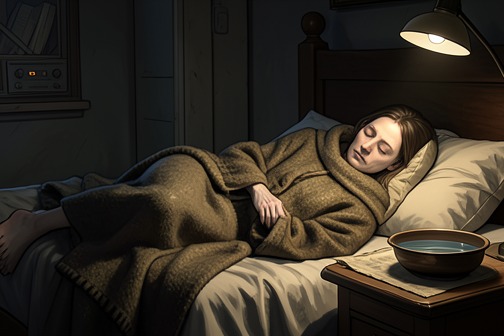
[Isobel's severe illness and recovery at Havistock Hall](entity:event-recall-event-isobel-havistock-hall-eb1bb104af3b) is the story of a rescue that did not end with reaching shelter: after escaping [Rupert](entity:character-recall-character-rupert-d1c14ade5ea7), [Isobel](entity:character-recall-character-isobel-da5547cd8ca4) arrived dangerously malnourished and ill, and for weeks her survival depended on sustained care. Her condition brought [Dominic](entity:character-recall-character-dominic-a456bf208f92) face to face with his inability to control the outcome, while her slow return to awareness made the household's care visible as a daily, uncertain process.
## Arrival and Condition
Dominic brought Isobel to [Havistock Hall](entity:location-recall-location-havistock-hall-511330894992) after finding her in a state of extreme exhaustion. On the journey, he wrapped her in his wool cloak and held her close against the cold. She could hear his voice only indistinctly and could not summon the strength to open her eyes. When she fainted, he could not tell whether starvation, cold, exhaustion, or fear had overwhelmed her. Rain began before they reached the house, adding to the danger of the journey.
At Havistock, Dominic carried her upstairs without stopping at the guest rooms and took her to his own suite, determined to remain near her. On his bed, her small, fragile appearance made the severity of her condition plain: she had nearly starved, and her clothing offered inadequate protection even against the conditions she had already endured. Dominic, who had witnessed suffering on battlefields, was unprepared for the extent of her plight. He lit the fire and began removing her wet outer clothing, but when Mrs Holcombe and two maids arrived, he recognized the need to preserve Isobel's dignity and left them to help her.
The doctor had visited by the time Dominic was told the news, and the outlook was grave. Isobel's lungs were in serious condition, and her malnutrition made her less able to withstand the illness. Dominic sent for [Peter](entity:character-recall-character-peter-22e18a2305ec) so he could tell him both that his sister had survived and that her life remained in danger. The first days brought little improvement. Mrs Holcombe reported that Isobel had taken only a small amount of nourishment; Dominic understood that the broth she was managing to drink was not enough to sustain her.
## Care Through the Crisis
The household's care was practical and persistent. Mrs Holcombe and the servants helped tend Isobel, while Dominic stayed close, urging her to drink when she was conscious enough to do so. Broth and the doctor's tincture were among the measures used; later, a tisane was also part of her treatment. These efforts did not produce a quick recovery. Nearly three days after Isobel's arrival, she remained in much the same condition, and Dominic's frustration arose from the gap between the care he could provide and the improvement he desperately needed to see.
A severe snowfall made that helplessness more acute. During the night, Dominic heard a strange rattling sound and went to Isobel's bed. He found her unresponsive and unusually cold despite the warmth of the room. Her pallor and stillness recalled to him the appearance of mortally wounded soldiers, but when he checked, he could feel a faint heartbeat. He summoned Mrs Holcombe, who had already become a trusted source of help during the illness. With the storm worsening, however, the doctor could not readily be brought to the house. Mrs Holcombe advised sending for him, but Dominic judged that a journey in the weather would put the messenger at serious risk and that the doctor might not travel even if summoned.
Isobel suffered repeated, severe coughing fits. Mrs Holcombe helped change her into a warm, dry nightgown and replace the damp bedding, while the fire was kept burning. Dominic held Isobel and tried to give her the tincture the doctor had left, waiting for the coughing to ease enough for her to take it. When her condition caused further alarm, he left Havistock Hall despite the staff's protests, unwilling to wait without trying to find help. He returned at daybreak, exhausted and covered in snow, fearing that Isobel might have died while he was away. She was still alive, and he went straight upstairs to her. He then stayed beside her, gathered her into his arms, and slept only intermittently.
## Awakening and Gradual Recovery
Isobel's return to consciousness was gradual. At first she registered only distant murmuring and could not make out what was being said. She felt warm and at peace, but unease and indistinct threatening images also passed through her confused awareness. When she could respond, her voice was hoarse and her memory uncertain. Dominic told her that they had nearly lost her; she did not understand the danger he meant, since she was awake and present with him. Her recollections of the illness were fragmented enough that she could not be sure which remembered events had happened and which might have come from her confused state.
When Isobel asked how long she had been at Havistock Hall, Dominic told her it had been three weeks. Her astonishment made clear how much time had passed beyond her conscious grasp. He could only begin to explain that her situation had been poor before exhaustion overtook her again. She fell back into a deep, restorative sleep, comforted by his nearness. Dominic told her she would not be merely a guest at Havistock, though she was too tired to ask what he meant.
Her survival did not mean that she was immediately well. When Dominic later described her condition to Peter, he explained that Isobel had been half-starved since escaping Rupert and had only two halfpennies in her pocket when she was found. It had taken time to coax her to eat enough to sustain her. Her lungs had improved, but remained a serious concern; the doctor advised warmth and as much food as she could manage, and the tisane was still being given. Because she had been so weak and malnourished, recovery was slower than it might otherwise have been. Three and a half weeks later, she was still weak and confined to bed, tired of the restriction and longing for fresh air. Much of the period had passed in eating and sleeping, and she remembered little of it.
## Significance and Aftermath
The illness turns the rescue from Rupert into a prolonged test of survival. Isobel had escaped, but the effects of deprivation and exposure continued to threaten her after she reached safety. The snowstorm sharpened that danger by restricting access to outside medical help, leaving Dominic and the household to rely on warmth, food, the medicines already available, and close observation. The slow course of improvement also distinguishes awakening from full recovery: after three weeks Isobel could speak and ask questions, yet she remained weak and needed ongoing care.
The experience also changes the balance of care between [Isobel and Dominic](entity:relation-recall-relation-isobel-and-dominic-c131a23d61c7). During her illness, he had to wait beside her, watch for signs of change, and accept that his efforts could not guarantee her survival. Later, when Dominic himself was incapacitated, Isobel recognized the helplessness of sitting beside someone she loved and being unable to hasten recovery. She stayed near him and encouraged him to be strong, echoing the attentiveness with which he had watched over her. Her illness thus remains consequential beyond her own convalescence: it establishes a shared experience of vulnerability and care, while marking Havistock Hall as the place where she survived the immediate aftermath of her escape.
Event 7
Isobel and Dominic's first union in the stable loft
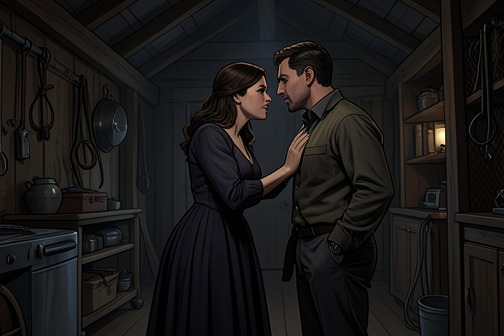
[Isobel and Dominic's first union in the stable loft](entity:event-recall-event-7ce019c06007) is the intimate culmination of a secret midnight visit: [Isobel](entity:character-recall-character-isobel-da5547cd8ca4) risks discovery to reach [Dominic](entity:character-recall-character-dominic-a456bf208f92), and their reunion in a barn gives way to a night together before his departure. The scene turns their desire into a consequential choice, while making the limits around that choice plain: Dominic expects to be away for months, there is no time for a hurried marriage, and dawn will bring the risk of discovery back into view.
## The decision to seek Dominic
Dominic is staying at his uncle’s house, about two miles away, and Isobel spends an hour pacing and weighing her desire against prudence. She does not know the layout of the house or where he will be, and understands that an unauthorised nighttime visit could damage her reputation. She also anticipates Dominic’s displeasure and worries about [Peter](entity:character-recall-character-peter-22e18a2305ec)’s reaction. Her hesitation does not change what she wants: to see Dominic before he goes.
She trusts her horsemanship and her mount, Betsy, and sets out through the woods in the dark. At [Sedgwick House](entity:location-recall-location-sedgwick-house-5e792a3844c4), she avoids riding up to the building, ties Betsy to a fallen branch near the gardens, and proceeds on foot toward the stable block. With her riding cloak wrapped around her and its hood pulled high, she hopes that anyone still abroad will not recognise her. It is well past midnight; the quiet courtyard and sleeping staff offer cover, but her route toward the main house leaves her exposed to the possibility of being found.
## The meeting in the barn
A shadow suddenly seizes Isobel, covers her mouth, lifts her off the ground, and drags her into the barn, where she is thrust against a wall. Her fear gives way when she recognises Dominic’s voice. He is scowling and demands to know why she has come; she can only tell him that she needs to see him. He orders her to go home, making the immediate conflict between her determination to stay and his attempt to send her away explicit.
When words fail her, Isobel acts: she takes his face in her hands and kisses him. Dominic does not push her away, but at first he does not draw her closer as he had earlier in the study. She reads that restraint as painful evidence of his reluctance and persists rather than retreating. As she presses the kiss, he responds, eventually pulling her tightly against him. The physical change in his response turns the encounter from a rejected or uncertain advance into a mutual embrace, though his concern about what should happen next remains.
## A night before departure
Dominic knows he is leaving early the next morning, and that his mission is expected to take several months even if it proceeds smoothly. He loves Isobel and is glad she has come, but believes he cannot afford to compromise her by sleeping with her and then departing. He also considers his friendship with Peter and the lack of time to arrange a marriage before he leaves. His resistance is therefore not a lack of feeling: it is an effort, ultimately unsuccessful, to hold desire apart from the consequences he anticipates.
A nearby man’s interruption makes concealment part of the scene. Dominic does not disclose Isobel’s presence; instead, he lets the man infer that he is alone with a young maid and needs privacy. After the man leaves, Dominic turns back to Isobel, admits to himself that he cannot stay angry with her, and recognises both his desire and his delight at having more time with her. He still says they should not proceed, but Isobel makes clear that she wants him. He eventually acts with care, warning that the first penetration will hurt and trying to be gentle. The encounter is her first sexual experience, and the narrative describes pain as well as pleasure; the event is not presented as a frictionless escape from the risks that concerned him.
## Dawn and its consequences
The night ends with their shared release and, as passion subsides, Dominic gently wakes Isobel. Dawn is beginning to lighten the sky, and he knows the stable lads will soon arrive. He also wants her back inside the safety of her own room at [Willowbrook Hall](entity:location-recall-location-willowbrook-hall-3470adb8c07d) before the household discovers her absence. His immediate concern shifts from desire to protecting her reputation, and he gathers their scattered clothing before they leave.
About an hour later, the two walk through the early-morning mist toward the kitchen doors of Willowbrook Hall. Isobel insists that the door she used to escape the previous night will not have been locked; they return to that same entrance and pause in silence. The conclusion brings the night back to the threshold between secrecy and ordinary household life. Their union has made their attachment physical, but it does not cancel Dominic’s impending departure or resolve the practical dangers that shaped his hesitation. Instead, the hurried return underscores how much of their intimacy must remain hidden for now.
Event 8
Isobel and Dominic marry

[Isobel and Dominic marry](entity:event-recall-event-088f14b7a1e5) after a proposal that brings their private desire into direct contact with [Isobel](entity:character-recall-character-isobel-da5547cd8ca4)’s doubts and the legal threats surrounding her past. Their wedding is both a personal choice and a public change of status: Isobel becomes [Dominic](entity:character-recall-character-dominic-a456bf208f92)’s wife, while a disputed betrothal to [DeLisle](entity:character-recall-character-delisle-ad0cdbc91576) and the misuse of guardianship continue to shadow what marriage can mean in their story.
## Background and Stakes
Isobel’s path to marriage has been shaped by coercion as well as affection. Recalling the afternoon [Rupert](entity:character-recall-character-rupert-d1c14ade5ea7) arrived at Willowbrook, she explains that he claimed [Peter](entity:character-recall-character-peter-22e18a2305ec) had died in [Norfolk](entity:location-recall-location-ead851996a91) and that he had therefore become her guardian. He gave her little time to pack and pressured her to leave, threatening that [Elspeth](entity:character-recall-character-elspeth-eed8b5b30dee) should be sent to an asylum if Isobel resisted. Isobel agreed to go only after securing Rupert’s promise that Elspeth could remain at Willowbrook. Her account establishes the vulnerability that makes the question of consent consequential: a guardian’s assertion of authority has already been used to control where Isobel lives and what choices she can make.
That earlier abuse is connected to a separate attempt to dictate whom she should marry. Isobel later recalls that Rupert tried to force her to sign a betrothal document naming DeLisle as her intended; she refused, and the men present understand from the account that she suffered for that refusal. Peter, for his part, says he was Isobel’s legal guardian when the alleged marriage to DeLisle took place and had never authorized her to marry anyone except Lord Havistock. He also claims to possess papers, signed and witnessed by magistrates, recording Isobel’s betrothal to Dominic some three years earlier. These are claims made in the course of the confrontation, not an independent legal ruling, but they show why [Isobel and Dominic](entity:relation-recall-relation-isobel-and-dominic-c131a23d61c7)’s marriage carries stakes beyond its ceremony.
## Proposal and Consent
When Dominic proposes, his manner is tender but not detached from the urgency of their situation. He asks Isobel to marry him while kissing her jaw, aware that she is weighing their future. Isobel recognizes that unresolved matters remain, yet accepts on the condition that Dominic is certain marriage is the right course. Her answer is a deliberate decision, not a simple release from doubt.
The uncertainty she is weighing concerns his feelings as much as the practical consequences. Isobel believes she loves Dominic, but fears that he may care for her without loving her in return. She doubts that such a marriage would be enough, even as she is tempted by his persuasive closeness, and wonders whether she can hold out for the fuller commitment she wants. Dominic’s proposal and her acceptance therefore do not erase the emotional imbalance she fears; they make the choice between hope and uncertainty immediate. His heartfelt relief after she agrees, and the weight he feels lift from his shoulders, show how much the answer matters to him.
The couple does not wait long. Dominic says that the roads are too poor for his parents to travel from Berkshire at once, while his brothers are expected on horseback within days. He tells Isobel that he does not want to wait another minute and that, having nearly lost her once, he will not make the same mistake again. This is not the declaration of love she hoped would settle her concern. She accepts his reassurance for the moment, but the lingering unease remains as she falls asleep beside him.
## The Wedding
Two days later, Isobel stands before a vicar as Dominic slides a simple gold band onto her finger. The vicar pronounces them man and wife and invites the kiss that confirms the ceremony’s change of status. Dominic sweeps Isobel into his arms and kisses her amid the raucous cheers of assembled family members and staff. Within minutes, the gathering has returned to the house for a magnificent banquet. The scene moves from the formal words of the ceremony to public celebration: the marriage is not only a promise between the two of them but a bond recognized by the people gathered around them.
The celebration does not prevent the day’s enormity from catching up with Isobel afterward. Late that evening, alone in the master suite as she waits for her new husband, she sits on a window seat and stares into the night sky, absorbing that she is now married and the new Lady Havistock. Her inward pause contrasts with the noisy cheers and banquet. The wedding has happened swiftly, and its consequences are real, even while she is still trying to take in the transformation.
Dominic’s brothers, [Edward](entity:character-recall-character-edward-43494b44a4ba) and [Sebastian](entity:character-recall-character-sebastian-7fce10745ce8), have arrived before the ceremony. Isobel is charmed by them; both are tall, handsome, good-natured, and possessed of an effortless charismatic charm. They spend much of their visit teasing their elder brother about his impatience to get Isobel up the aisle. Their welcome supplies a familial counterpoint to the hostile family authority Isobel has experienced through Rupert: here, the marriage is met with jocularity and warmth rather than threat.
## Disputed Documents and Later Understanding
The wedding does not make the earlier marriage claims disappear. When Rupert and DeLisle later challenge Isobel’s marital position, Peter places himself between the men and invokes his authority as her guardian. He argues that Isobel could not lawfully have married DeLisle without permission and points to the previously drawn-up, signed, magistrate-witnessed papers recording her betrothal to Dominic. His intervention frames the marriage as both an intimate commitment and a point of conflict over who had the right to decide Isobel’s future. The episode leaves the alleged DeLisle marriage to be investigated rather than presenting Peter’s claim as a completed judicial finding.
Later, in a quiet exchange with Dominic, Isobel asks whether he believed the marriage documents were real. He admits that at first he did, because she had been desperately ill when she arrived and he could not be certain whether trauma had made her unwilling to acknowledge a marriage to DeLisle. He says that this doubt lasted only moments: knowing Isobel led him to conclude that she would never knowingly enter a bigamous marriage. His answer retrospectively joins trust to their wedding story. The papers had briefly made her past seem capable of invalidating their bond, but his knowledge of her character overcame that suspicion.
In the same later conversation, Isobel tells Dominic that she has loved him from the moment they met and will love him for the rest of her life; he answers that he loves her. That mutual declaration provides the emotional certainty she lacked when she accepted his proposal. The wedding marks their public union, while this later exchange makes explicit the reciprocal love that her earlier doubts could not yet establish.
Event 9
Isobel fakes her death and escapes

[Isobel Davenport](entity:character-recall-character-isobel-davenport-fa4c7fcddebf)’s feigned death was a calculated escape from [Rupert Davenport](entity:character-recall-character-rupert-davenport-c0531eea5ced)’s pursuit, not an actual death: by letting others believe she had been murdered, she hoped to gain the time and independence she needed to outlast her guardianship. [Hubert Williams](entity:character-recall-character-hubert-williams-febd9c250086) helped make the deception credible, using a dead woman who loosely resembled [Isobel](entity:character-recall-character-isobel-da5547cd8ca4) and false records to support the story. The plan protected Isobel, but its success depended on extending the lie to people who cared for her, including [Dominic Cavendish and Peter Davenport](entity:relation-recall-relation-dominic-cavendish-an-99c0da120315).
## Causes and Stakes
The immediate danger was [Rupert](entity:character-recall-character-rupert-d1c14ade5ea7)’s pursuit and the power he retained over Isobel while she remained under guardianship. Isobel’s objective was to remain beyond his reach until she turned twenty-five, when she would no longer need a guardian and could claim the money and property inherited from her maternal grandmother. The false report of her death was therefore a way to create a temporary space in which Rupert would stop searching, rather than a final break with her former life.
The choice also arose from Isobel’s precarious position after she was alone. In recalling her escape, she explained that she initially sought help from Hubert but could not remain with his family because the guardianship question still constrained her. She had to hide, and believed she could not safely present herself at [Dominic](entity:character-recall-character-dominic-a456bf208f92)’s door. Rupert had given her news that made her think Dominic’s wife would not welcome her. Isobel thus faced a narrowing set of options: she needed protection from Rupert, yet could not simply take refuge with the people closest to her.
## The Arrangement with Hubert
Hubert’s involvement rested on an older bond with Isobel’s family. Isobel’s father had saved Hubert’s life, and Hubert became her father’s close friend; he and his wife visited during the latter years of the father’s life. As Isobel’s father was dying, Hubert promised that he would help either Isobel or [Peter](entity:character-recall-character-peter-22e18a2305ec) if either needed him. Peter had been away at university and had never met Hubert, but Isobel knew of the promise when, after losing her way, she found herself near Hubert’s house. Approaching him carried risk: he might have handed her over to Rupert. She chose to trust that he would keep his word.
Isobel and Hubert then used a real murder in a village to give the false account a plausible basis. A woman whose appearance only loosely matched Isobel’s had been found dead there; Hubert considered it best to use that discovery to confirm that the victim was Isobel. Their story was supported by forged death papers and a forged entry in the church record. Isobel later acknowledged to Dominic that Hubert had helped tell the lie and confirmed that he had arranged the false documentation. The plan’s force came from making an invented identity attach to an actual death, so that Rupert would accept the report and abandon his pursuit.
## The Escape and Its Limits
Isobel’s supposed death was meant to buy several weeks, not to settle her future permanently. She expected to remain hidden only until her twenty-fifth birthday, when the guardianship restriction would end and she could inherit in her own right. Hubert’s role, as Dominic came to understand it, was to buy her that interval. For Isobel, the false death was therefore a bridge between immediate danger and a future in which Rupert could no longer control her through guardianship.
Once the arrangements had been made, Isobel could not safely remain with Hubert’s family. She set out to keep herself inconspicuous and away from Rupert, but had no settled refuge. [Kitty](entity:character-recall-character-kitty-d0bbf3d0d3b1) advised her to head for [Coniston](entity:location-recall-location-coniston-30748784ebbf) in [the Lake District](entity:location-recall-location-f507156936d3). As Isobel travelled north, however, colder weather made that destination seem less survivable; after weeks of wandering without a clear plan, she feared that exposure and hunger would defeat her before she could reach safety. The episode shows the cost of the time Hubert had secured: the lie could make Isobel legally and socially appear dead, but it did not provide her with a secure place to live.
Isobel’s flight also turned toward Dominic, although she believed his household was closed to her. She later explained that she needed to be near him and had thought she could not go to his door. That desire did not erase the dangers or practical barriers of her escape; it made her isolation more difficult, as the person she wanted to reach was also someone she believed she could not approach openly.
## Revelation and Consequences
The false death continued to shape events after Isobel had escaped. Dominic and Peter had believed she was dead and had grieved for her, thinking she had been violently murdered. When Isobel disclosed Hubert’s part in the deception, Dominic understood that Hubert had helped sustain a lie and asked whether he had arranged the forged death papers and church entry. Isobel confirmed it. Dominic was relieved that she had finally told him the truth, but that relief did not immediately settle his anger: he could not understand why Hubert had not told them she was alive when they came looking for her.
Isobel’s explanation distinguished Hubert’s intention from the harm the lie caused. She had expressly told him to inform anyone searching for her that she was dead, and believed he had taken her at her word, including when Dominic and Peter sought her. She also thought he had become cautious because of Rupert’s situation and was trying to protect her, particularly because he had never met Peter and could not independently verify the brothers’ claims about who they were. Dominic remained troubled by the grief the deception had caused him and Peter, but the disclosure altered the meaning of Hubert’s silence: it was not simply an effort to deceive them for his own advantage, but part of the protection Isobel had asked him to provide.
The event’s central reversal is that the report of Isobel’s death both concealed her survival and injured the people who believed it. A real victim and falsified records made the story persuasive enough to interrupt Rupert’s pursuit; the same credibility made Dominic and Peter mourn someone who was alive. By explaining the plan, Isobel reclaimed the story of her disappearance from the false account imposed on it, while showing that the escape’s protection had depended on a lie whose consequences reached beyond Rupert.
Event 10
Isobel confronts Rupert in the garden
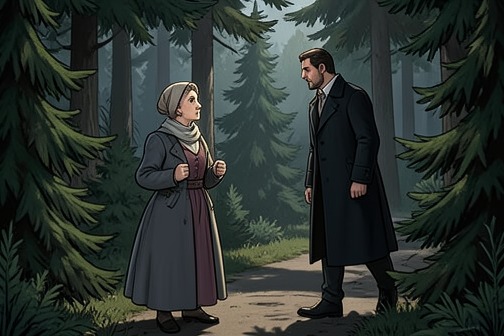
[Isobel](entity:character-recall-character-isobel-da5547cd8ca4)’s confrontation with [Rupert](entity:character-recall-character-rupert-d1c14ade5ea7) in the garden brings the threat he represents directly to the place she now calls home. Hidden among the conifers at [Havistock Hall](entity:location-recall-location-havistock-hall-511330894992), he tries to impose a new marriage on her; she answers by asserting her own choice, her marriage to [Dominic](entity:character-recall-character-dominic-a456bf208f92), and her right to defend the estate. Her defiance drives Rupert away, but the encounter ends not in safety so much as an urgent search and a visible return of the fear she had struggled to conceal.
## A Threat in Hiding
Before Rupert appears, Isobel senses that something is wrong. Though [Edward](entity:character-recall-character-edward-43494b44a4ba) is nearby talking with the head gardener and she knows herself to be safe, her shoulders tighten and her hands form fists. She has spent two months living by her wits, and the familiar unease makes her look carefully toward the break in the trees leading onto the lawns. The garden’s apparent calm becomes a warning: she has taken only a few steps when Rupert speaks from directly behind her.
Rupert has been waiting in the conifers, positioned so that neither the two men at the path nor anyone looking from the house can see him. His greeting casts Isobel as an elusive prize, and his manner makes clear that this is no accidental meeting. A burly henchman emerges behind him, close enough to pose a threat even if he is not yet within reach to seize her. The concealed approach and the man’s presence turn the garden, at the threshold of the estate, into a place where Isobel must judge danger before the household can respond.
## The Marriage Threat and Isobel’s Answer
Rupert says that a fiancé is waiting to make Isobel’s acquaintance. His cold, calculating gaze and the way he looks her over make the proposed match sound like an arrangement imposed upon her, not a choice she might make. Isobel refuses outright, telling him to marry the man himself if he likes him so much. Even as fear urges her to run, she keeps her contempt visible and refuses to let Rupert see how deeply his appearance unsettles her.
Rupert counters that she cannot escape him and invokes [DeLisle](entity:character-recall-character-delisle-ad0cdbc91576), who, he threatens, will make her remember her station in life. Isobel turns that language against him. She points to Rupert’s debts and the creditors she says are after him, then warns the henchman that his employer has no money. The exchange makes the threat’s financial and coercive dimensions explicit: Rupert speaks as though he can command her future, while she exposes his own precarious position and challenges his authority in front of his accomplice.
She then orders both men off the land, threatening to have them arrested for trespass. Her most consequential defense is to invoke Dominic: if she calls for her husband, she says, half the armed household staff will arrive before the intruders can take ten steps. The thought of Dominic nearby steadies her. When Rupert splutters at her claim, she declares herself Lady Havistock and offers to call him, adding that Dominic has been trying to find him. Her words are both a warning and a reversal: Rupert has come in secret to threaten her, but Isobel presents herself as a married woman with a home, a household, and protection close at hand.
## Withdrawal and Alarm
Isobel turns as if to shout. Rupert answers with foul language and a promise that she has not heard the last of him, then disappears through the conifers with his henchman. His retreat ends the immediate face-to-face danger, but not the threat: the promise leaves their conflict unresolved. Isobel has held her ground long enough to make the two men withdraw, yet the scene does not present composure as freedom from fear.
She closes her eyes in a silent prayer, then makes herself walk back toward Edward and the gardener with measured steps. They look startled by her pale, haunted face, but she ignores their questions and continues into the house. Once she crosses the kitchen threshold, she runs, not stopping until she reaches the library and throws herself into Dominic’s arms. The contrast between her controlled walk outside and her flight once indoors reveals the effort her defiance has cost her: she could face Rupert without showing him her fear, but could not simply shake it off.
## Consequences and Significance
Isobel tells Dominic that Rupert is at the far side of the rose garden, through the trees. Her warning sends the men in the room into action; within seconds, they are thoroughly searching the grounds. The encounter thus converts a private threat into an immediate household response and confirms that Rupert has reached the estate without being seen until Isobel confronted him. She is moved to sit before the hearth with brandy while Dominic rubs her arms to warm her trembling body.
The scene’s decisive shift is from the apparent security of home to the recognition that Rupert can still approach Isobel there. Her declaration of marriage and status does not eliminate the danger, but it changes the terms of the confrontation: instead of accepting Rupert’s account of her as someone he can direct toward a fiancé, she speaks as Dominic’s wife and as Lady Havistock, able to summon protection and demand that trespassers leave. The garden encounter makes her courage concrete while preserving its cost: she wins this exchange, and the search begins, but Rupert’s threat remains active.
Event 11
Dominic is ambushed and returns home wounded
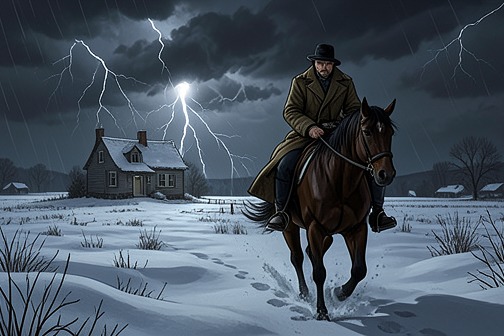
[Dominic is ambushed and returns home wounded](entity:event-recall-event-4439e5537632) after an attack on a snowy road turns his journey back to his wife into a fight for survival. His battered return exposes the danger of [Rupert](entity:character-recall-character-rupert-d1c14ade5ea7)’s pursuit and gives [Isobel](entity:character-recall-character-isobel-da5547cd8ca4) a chance to answer violence with decisive action of her own.
## Causes and Approach
Several days after Rupert accosted Isobel in the gardens of [Havistock Hall](entity:location-recall-location-havistock-hall-511330894992), [Dominic](entity:character-recall-character-dominic-a456bf208f92) remained wary of being lulled into a false sense of security. He believed Rupert was growing more desperate in his pursuit of money. Although Dominic disliked leaving Isobel in [Peter](entity:character-recall-character-peter-22e18a2305ec)’s care, he went to question Hubert about his past contact with her, reasoning that, as her husband, he was the person who could do so. The inquiry had yielded information useful to their pursuit of Rupert, but it also meant Dominic was returning home alone.
The journey took place on a winter night. After leaving a tavern, Dominic rode through darkness as fresh snow covered the ground and another storm threatened. The village lay several miles behind him; he pulled his cloak close and urged his horse onward, eager to get home to Isobel. Lost in thoughts about their marriage, he did not see the shadows beside the road until the attack was already beginning.
## The Ambush
The attack began before Dominic could react. He was pulled from his horse and struck by the men who had emerged beside and behind him. His recollection of the struggle would later remain uncertain: he remembered steel meeting steel and thought there had been at least three attackers, though he could not tell whether the same person had engaged him throughout. The violence left him badly injured, but did not prevent him from getting away.
Dominic later recalled that he had struck down two men on the back road from town and escaped a third. He also remembered someone standing apart in the shadows, watching without joining the fight. That figure’s presence widened the uncertainty around the ambush: Dominic could not identify the attackers, nor explain whether the observer had been involved in the plan. Isobel suspected Rupert, while Dominic wondered whether [DeLisle](entity:character-recall-character-delisle-ad0cdbc91576) might have been among the men; neither suspicion was established as fact in the account.
## Return to Havistock Hall
The attack became unmistakably personal when a motionless, ragged figure was found in the hall at Havistock. Isobel recognized the superfine wool of Dominic’s cloak before she could see him clearly, then confirmed that her husband lay beneath it, alive but gravely hurt. Peter and [Sebastian](entity:character-recall-character-sebastian-7fce10745ce8) moved to help, while Isobel refused to be sent away: she called for the doctor and directed Manvers to check whether Dominic’s horse had returned and to bring back any bags. Her composure turned the household’s shock into action. Manvers, who had doubted that she could manage alone during her earlier flight, now saw her meet the emergency with a resolve that matched the danger.
Sebastian later found Dominic’s sword and scabbard beside the road, about half a mile away. Both were bloodied, and signs in the snow, including the bodies of men who had not escaped the fight, supported Sebastian’s belief that Dominic had faced a fierce attack. Isobel understood the assault as another move by Rupert and a warning in their ongoing conflict; the evidence established the violence of the encounter, though it did not settle who had organized it.
## Consequences and Personal Cost
After Dominic was brought inside, the attack’s consequences became personal in a different way. Isobel stayed beside him, gently touching his hair and kissing an uninjured part of his face as she urged him to be strong and told him she loved him. His survival brought relief, but it did not quiet her fear: she blamed herself for his suffering and thought that, once she had recovered, she should have left him and returned to [Willowbrook Hall](entity:location-recall-location-willowbrook-hall-3470adb8c07d) in [Oxfordshire](entity:location-recall-location-afc60d45a524). That was her guilt, not proof that accepting his proposal had caused the ambush.
The episode therefore makes the danger surrounding Isobel register through the cost borne by the people protecting her. Dominic had returned from questioning Hubert with information useful to the pursuit of Rupert, but the journey home exposed him to an attack whose organizers remained uncertain. In its aftermath, Isobel’s devotion and self-reproach coexist: she stays with her husband and cares for him, even as she imagines that leaving might have spared him. The ambush deepens the conflict beyond pursuit and evidence, placing the security of their marriage under the same threat that has made Rupert’s actions so dangerous.
Event 12
Isobel and Dominic break into Rupert's home to retrieve evidence
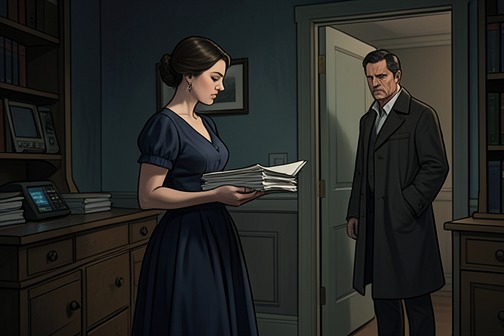
[Isobel and Dominic](entity:relation-recall-relation-isobel-and-dominic-c131a23d61c7)’s break-in at [Rupert Davenport](entity:character-recall-character-rupert-davenport-c0531eea5ced)’s house turns [Isobel](entity:character-recall-character-isobel-da5547cd8ca4)’s recollection of coercion into a search for documentary proof. The recovered papers give the couple a way to challenge [Rupert](entity:character-recall-character-rupert-d1c14ade5ea7)’s attempt to exploit her fortune and, later, his attack on the validity of her marriage to [Dominic](entity:character-recall-character-dominic-a456bf208f92).
## Background and Documentary Stakes
After Isobel was taken from [Willowbrook Hall](entity:location-recall-location-willowbrook-hall-3470adb8c07d), Rupert told her that [Peter Davenport](entity:character-recall-character-peter-davenport-977cc816e3bf) had died in [Norfolk](entity:location-recall-location-ead851996a91) and that Rupert had therefore become her guardian. He gave her little time to pack and pressed her to leave, while threatening that her aunt [Elspeth](entity:character-recall-character-elspeth-eed8b5b30dee) could be sent to an asylum if Isobel resisted. Isobel agreed to go partly to protect Elspeth, not knowing where Rupert was taking her. The story later establishes that Rupert had used threats and deception to secure Elspeth’s compliance in Isobel’s removal.
At [Gosport Hall](entity:location-recall-location-gosport-hall-fcf0fe7602e8), Rupert and his associate [Bertram DeLisle](entity:character-recall-character-bertram-delisle-781da659976a) repeatedly tried to make Isobel sign a betrothal document naming [DeLisle](entity:character-recall-character-delisle-ad0cdbc91576) as her intended. She refused. When Isobel later reconstructs those events, she remembers that the document already bore the signatures of Rupert and DeLisle, but lacked her own. Her account links the proposed betrothal to Rupert’s interest in her wealth: she reasons that the document could help secure a special license and force her into marriage, while her signature was necessary to make it legally effective. In her view, its existence would also show that Rupert was trying to obtain access to her fortune despite not being her guardian.
The immediate clue emerges when Isobel tells the household that she knows how to find evidence that Rupert knew about her fortune. Writing her experiences in sequence, as Dominic had asked, has brought the document back to mind. [Peter](entity:character-recall-character-peter-22e18a2305ec) and Dominic consider whether Rupert might have destroyed it, but Isobel argues that he could have kept it to support a later claim that she was already promised to DeLisle when she married Dominic. Dominic concludes that the document is likely at Rupert’s house across town. Peter offers to go, but the search becomes a question not only of retrieving evidence, but of whether Isobel will be allowed to act for herself.
## Isobel Insists on Taking Part
Dominic prepares to leave with a blade in his pocket and expects Isobel to remain behind. She refuses that division of roles. With [Sebastian](entity:character-recall-character-sebastian-7fce10745ce8) away in [London](entity:location-recall-location-1bfd335cdd1b) and Peter in Derby, she would otherwise be left at [Havistock Hall](entity:location-recall-location-havistock-hall-511330894992) with [Edward](entity:character-recall-character-edward-43494b44a4ba), waiting while Dominic took the risk. Her resistance is shaped by an earlier experience of waiting for him and by the fact that the evidence concerns her own captivity and the pressure she endured.
Isobel makes clear that Dominic may accompany her or leave her to go alone, but cannot simply prevent her from going. She tells him that the marriage they are trying to build depends on his accepting her decision. When he questions how they could get into the house, she states that she intends to break in and retrieve the papers. She does not present the venture as a request for permission or help: she needs to do it for herself, because Rupert’s actions were directed against her and she wants the documents she knows exist.
Their disagreement gives way to a joint plan rather than to Isobel’s withdrawal. Dominic recognizes her resolve and helps her assess the approach to the house. Before they move, he asks her to promise that if anyone returns, she will run directly home rather than hide or wait for him. Isobel agrees, but asks him in turn not to stay behind and play the hero. The exchange sets the terms of the risk: they will search together, but their escape depends on neither treating the other as expendable.
## The Search and Escape
They approach through the shrubbery, keeping to the shadows. At the door, Dominic works the latch; its click sounds alarmingly loud to Isobel, and they pause to listen. When nothing stirs, they ease inside the large kitchen. In the dark, they make out the table and the pot-laden dressers along the far wall. Dominic crosses the room quietly, while Isobel follows, keeping her cloak close and continuing despite her fear.
They make their way upstairs and search for Rupert’s room. After checking the master suite and two guest rooms, Isobel spots Rupert’s trunk at the foot of a bed in the last room they enter. They close the door and wait as candlelight passes beneath it. Their first search of the writing table, clothes press, and small table beside the bed turns up nothing. Isobel continues through the drawers until Dominic taps her shoulder and shows her a roll of papers.
Isobel unrolls the papers and reads what she can in the gloom. Her relief tells her that they have found the documents she believes can expose Rupert’s scheme. The narrative identifies the recovered papers as two documents that could seal his fate, though the scene does not set out their full contents. Their importance rests on the contrast between Rupert’s claim to authority and the written evidence Isobel expects to find: he had tried to secure her signature to a betrothal while, as she understands the matter, having no right to act as her guardian.
They leave without lingering. Once outside, they shelter among the shrubs and watch the candlelight disappear from the upper window, apparently moving down the internal staircase. They retrace their route across the gardens and into the trees. Isobel nearly stops to celebrate, but Dominic reminds her to keep moving; he looks back to check for pursuit and signals her onward. The urgency of their retreat carries the evidence out of Rupert’s house and back toward Havistock Hall. Later, Dominic removes the papers from a concealed pocket in his cloak and hides them in a compartment in the fireplace.
## Consequences and Significance
The recovered papers shift the conflict from Isobel’s recollection of Rupert’s conduct toward evidence that can be used against him. Their value is not merely that they record a proposed betrothal: according to Isobel’s reasoning, they connect Rupert and DeLisle to an attempt to compel her into marriage for access to her wealth. The missing signature is central to that reasoning. Isobel’s refusal had prevented the document from taking the form they wanted, but the signed paper could still reveal what they had tried to accomplish.
The danger of disputed documents becomes clear when Rupert later confronts Isobel and Dominic and claims that Isobel is already married to DeLisle, making her marriage to Dominic bigamous. Isobel denies ever having married DeLisle. Peter counters that he was Isobel’s legal guardian when she married Dominic and had not consented to any other marriage; he also says he holds papers, witnessed by a magistrate, recording Isobel’s betrothal to Dominic years earlier. These later claims do not amount to a final ruling in the scene, but they show why the break-in matters: documents become weapons in a struggle over who can define Isobel’s legal and personal status.
The episode also marks a change in Isobel’s position within the conflict. Rupert had previously controlled her movements through false claims about Peter’s death, threats against Elspeth, and the abrupt removal from Willowbrook Hall. At his house, Isobel chooses the objective, insists on joining the search, identifies the document’s significance, and helps bring the evidence out. Dominic’s concern remains evident in the escape plan, but the action is no longer his alone. The papers are a practical means of challenging Rupert, while the decision to retrieve them makes Isobel an active participant in that challenge.
Event 13
Rupert invades the estate and takes Isobel hostage
[Rupert](entity:character-recall-character-rupert-d1c14ade5ea7)’s invasion of [Dominic Cavendish](entity:character-recall-character-dominic-cavendish-2b4bcec99931)’s home turns [Isobel](entity:character-recall-character-isobel-da5547cd8ca4)’s earlier abduction into an open confrontation over her freedom, marriage, and inheritance. By taking her hostage when his supposed legal claims begin to fail, Rupert exposes the coercion behind his efforts to control her and [Gosport Hall](entity:location-recall-location-gosport-hall-fcf0fe7602e8).
## Causes and Background
Two and a half weeks after Isobel had gone to stay with Aunt [Elspeth](entity:character-recall-character-elspeth-eed8b5b30dee), Rupert arrived at [Willowbrook Hall](entity:location-recall-location-willowbrook-hall-3470adb8c07d) in a rage. He said he had come to remove Isobel, claiming that [Peter Davenport](entity:character-recall-character-peter-davenport-977cc816e3bf) had died in [Norfolk](entity:location-recall-location-ead851996a91) and that a magistrate had therefore made him her guardian. Isobel was stunned chiefly by the news of [Peter](entity:character-recall-character-peter-22e18a2305ec)’s supposed death; Rupert offered no clear account of what had happened, but demanded that she pack at once and said he would arrange for Willowbrook Hall to be disposed of later. When she argued that she should remain, he threatened to have Elspeth declared unstable and sent to an asylum. Isobel agreed to leave only after securing his promise that Elspeth could stay at Willowbrook Hall for the time being.
Rupert gave Isobel little time to prepare. When the carriage was ready, she insisted that her maid [Kitty](entity:character-recall-character-kitty-d0bbf3d0d3b1) accompany her and refused to leave without her. Shocked and unable to establish whether Peter was truly dead, Isobel was hurried away before she could understand where Rupert intended to take her. The abduction thus began under the cover of a claimed guardianship and a crisis Rupert himself had announced, while Isobel’s immediate concern for Peter and fear for Elspeth constrained her choices.
The destination was Gosport Hall, a remote hunting lodge outside Northampton that had belonged to Isobel since her father’s death. Her father had inherited it from her grandmother, and it had passed directly to Isobel, but the family had left it closed and mothballed while she was young. Peter remembered it as a second home where he and Isobel had spent time as children; they stopped visiting after their mother died, because their father could not bear to return. Peter had even forgotten the property existed. [Dominic](entity:character-recall-character-dominic-a456bf208f92) later reasoned that Rupert could exploit that remoteness to keep Isobel close to Dominic’s home while ensuring that those searching for her would not find her.
The property mattered not only as a place of confinement but as the focus of a financial plot. While writing an account of the events that had driven her onto the streets, Isobel remembered that Rupert had tried to force her to sign a betrothal document naming [DeLisle](entity:character-recall-character-delisle-ad0cdbc91576) as her intended. She had refused and was beaten for resisting. The remembered document connected the abuse at Gosport Hall with Rupert’s later attempt to present Isobel as already married: both papers were instruments of coercion, designed to make a claim over her appear settled before anyone could challenge it.
## The confrontation over marriage
Rupert’s control of the scene began with a command. From inside Dominic Cavendish’s house, he shouted for Isobel to come downstairs, addressing her as though he still had authority over her. Fear briefly made her want to retreat, but she reminded herself that this was her own home and refused to be summoned into submission. She descended with her shoulders straight, entering the study beside Dominic, who confronted Rupert’s belligerence and demanded that he explain himself. The change in setting mattered: the man who had removed Isobel from Willowbrook Hall now stood in the house she shared with her husband, where his former power over her could no longer go unchallenged.
Dominic asked what Rupert wanted with his wife. Rupert seized on the word, feigning surprise before declaring that Isobel could not be Dominic’s wife. He claimed that she was already married and produced a parchment from beneath his coat, presenting it as proof. He then asserted that a vicar who had performed the marriage could confirm it and that the event was recorded in a church register. The document changed the confrontation at once. Isobel watched Dominic examine it; his silence and failure to look at her made her fear that he believed the claim. Though she had just resisted Rupert’s command, the paper threatened to make her defiance appear powerless by giving his accusation the appearance of legal fact.
DeLisle reinforced the claim by addressing Isobel as his wife and asserting a right to take possession of her. She answered with open refusal, saying she would rather die than go near either man. Her resistance was not merely verbal: when DeLisle moved to take her away, [Edward](entity:character-recall-character-edward-43494b44a4ba) struck him, while [Sebastian](entity:character-recall-character-sebastian-7fce10745ce8) positioned himself protectively between [Isobel and Rupert](entity:relation-recall-relation-isobel-and-rupert-b846aaa8ab7b). The confrontation exposed how the purported marriage depended on coercion and force even as Rupert and DeLisle presented it as an established bond.
Peter challenged the claim on the basis of Isobel’s guardianship. He stated that he had been her legal guardian when the supposed marriage occurred and had never given permission for her to marry anyone except Dominic. He also recalled papers, drawn up and signed some three years earlier with magistrate witnesses, recording Isobel’s betrothal to Dominic. In his account, that prior commitment further undermined the possibility that she had been free to marry DeLisle. Peter did not treat the document Rupert presented as conclusive: he said its validity would have to be investigated before Isobel went anywhere. His intervention brought the dispute back from Rupert’s theatrical declaration to the question of who had authority to decide Isobel’s marital status.
Dominic likewise challenged the assumption that any parchment should be accepted without scrutiny. When he referred pointedly to betrothal documents, Rupert recognized that the earlier deception had been exposed and accused Dominic of breaking into his house. Dominic neither confirmed nor denied the accusation. Instead, he offered Rupert and DeLisle a choice: submit to escort by Edward and the armed servants to the magistrate and await trial, or be dragged out. DeLisle appeared to understand that the balance had turned against him and was led away after being checked for weapons. Rupert, however, had not yet surrendered control of the encounter, and the threat represented by the documents was about to become physical again.
## Hostage-taking and the scheme exposed
The paper dispute gave way to immediate physical danger. As Dominic watched DeLisle being taken away, a sudden movement drew his attention back to Rupert. Rupert seized Isobel and pressed a long knife to her throat; its edge cut her skin, and she felt blood trickle beneath her chin. He ordered Dominic to move away, turning the household’s attempt to remove the two men into a hostage crisis. Dominic called for Edward, who returned with DeLisle, while Sebastian remained ready to intervene. Dominic recognized that the pair’s plan had nearly succeeded and blamed himself for letting his attention shift.
With Isobel still in Rupert’s grasp, Dominic recited the alleged crimes behind the confrontation: Rupert had kidnapped her from Willowbrook Hall, confined her at Gosport Hall after breaking into it, beaten her, and tried to force her to sign a false betrothal document while pretending to be her guardian. Dominic added false imprisonment, attempted embezzlement, breaking and entering, physical assault, and the present threat of murder to the charges. The inventory made Rupert’s claimed authority look less like guardianship than a sequence of coercive acts, while Isobel’s life remained the immediate stake. When Rupert jostled her and pressed the knife further beneath her chin, she steadied herself by meeting Dominic’s gaze.
Peter asked whether the struggle was really about Gosport Hall. Rupert’s answer connected the attempted marriage to his debts: DeLisle had paid him to take Isobel as a wife, and Rupert needed money to keep his creditors at bay while he secured her signature transferring the house and land. DeLisle, in turn, disclosed that he expected to obtain both Gosport Hall and control of Isobel’s funds after the marriage; he also threatened that, if she did not bear him a child within six months, she would suffer the fate of his other wives. The two men’s alliance was therefore a bargain over Isobel’s person and property, not a legitimate marriage dispute. Rupert resented that Gosport Hall had gone to Isobel rather than to him, but his own explanation showed that he had turned that grievance into a scheme for immediate payment and a later transfer of her inheritance.
## Exposure and the Unresolved Threat
The revelations did not immediately end the danger in the room. Rupert still held Isobel at knifepoint when he explained that his grievance began with Gosport Hall: he believed his mother should have left the property to him, and blamed its inheritance by Isobel for depriving him of what he considered rightfully his. Peter’s incredulity sharpened the contrast between that asserted grievance and Rupert’s actual scheme. Rupert admitted that he had needed DeLisle’s payment to keep his creditors at bay while he tried to secure the transfer of the house and land.
DeLisle’s account exposed the other side of their bargain. He had expected marriage to give him access to Gosport Hall and control of Isobel’s funds, and described a plan to discard her if she failed to bear him a child within six months. His disclosure turned the forged-marriage claim into evidence of a broader design: Rupert sought money and the transfer of Isobel’s inheritance, while DeLisle sought her property and intended to control her future. Their alliance fractured into mutual accusations, and DeLisle was dragged from the room again by Edward and Peter as Rupert mocked him and insisted that he was not greedy, but merely wanted what should have been his.
The scene therefore closes its central dispute without making Isobel’s safety seem secure. Rupert’s papers had been challenged, DeLisle’s intentions exposed, and the coercion behind their supposed marriage laid bare; yet Rupert’s knife kept the danger immediate. The hostage-taking transforms a contest over documents, guardianship, and inheritance into a struggle over Isobel’s life, while the men’s own admissions reveal that the legal claims were instruments in a property-and-money scheme.
Event 14
DeLisle takes his own life
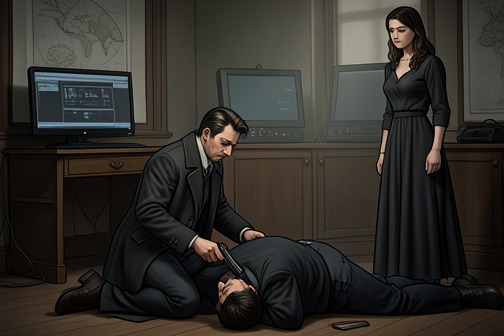
[DeLisle](entity:character-recall-character-delisle-ad0cdbc91576)’s death ends the immediate confrontation but does not end the effort to bring the remaining danger to justice. [Edward](entity:character-recall-character-edward-43494b44a4ba) reports that DeLisle died by Edward’s gun while struggling; [Dominic](entity:character-recall-character-dominic-a456bf208f92), showing no remorse for DeLisle, instead checks that [Isobel](entity:character-recall-character-isobel-da5547cd8ca4) is safe and calls for [Rupert](entity:character-recall-character-rupert-d1c14ade5ea7) to be restrained and taken to jail.
## Circumstances and Report
Edward explains that DeLisle began to struggle and shot himself with Edward’s gun. He gives this account with an apologetic glance toward Isobel, and judges that the prospect of the gallows had been too much for DeLisle. The account establishes the manner of DeLisle’s death while leaving its immediate cause framed as Edward’s assessment.
## Dominic’s Response
Dominic says that, as long as Isobel is all right, all is well. His response makes her safety the priority and explicitly shows that he feels no remorse for DeLisle’s death. The brief exchange shifts attention from DeLisle’s fate to the people still present and the consequences of the confrontation.
## Immediate Aftermath
Rupert remains unconscious at Dominic’s feet. Dominic orders that Rupert be restrained and taken to jail before he can do anything foolish to evade justice. DeLisle’s death therefore brings neither the confrontation nor the pursuit of accountability to a close: the immediate next step is to secure Rupert.
Event 15
Isobel returns after being presumed dead
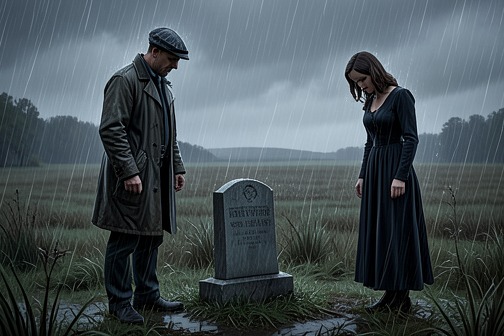
[Isobel returns after being presumed dead](entity:event-recall-event-6fd7b2d1fbd7), and the significance of that return emerges in the grief it left behind. [Dominic](entity:character-recall-character-dominic-a456bf208f92) recalls standing with [Peter](entity:character-recall-character-peter-22e18a2305ec) beside her grave in the drizzle, convinced that she was beyond his reach; their present reunion is shadowed by the knowledge of what he thought he had lost.
## The Grave and the Belief of Loss
Dominic’s account fixes the presumed death in a stark image: he and Peter at [Isobel](entity:character-recall-character-isobel-da5547cd8ca4)’s graveside, with rain falling as Dominic believed her dead. The grave makes his mistaken certainty tangible. He describes the grief as overwhelming, and imagines that, had he been able, he would have crawled into the small space beside her. His words establish not how Isobel returned, but what her supposed death meant to the people who mourned her.
## Return and Its Aftermath
The recollection surfaces after Dominic has feared losing Isobel again. Her return has not erased the earlier loss from his mind; the grave remains vivid enough to intrude on their present closeness. The scene therefore presents the return not as a simple reversal of death, but as a reunion carrying the emotional residue of a separation Dominic had believed final.